Patents & Industrial Designs
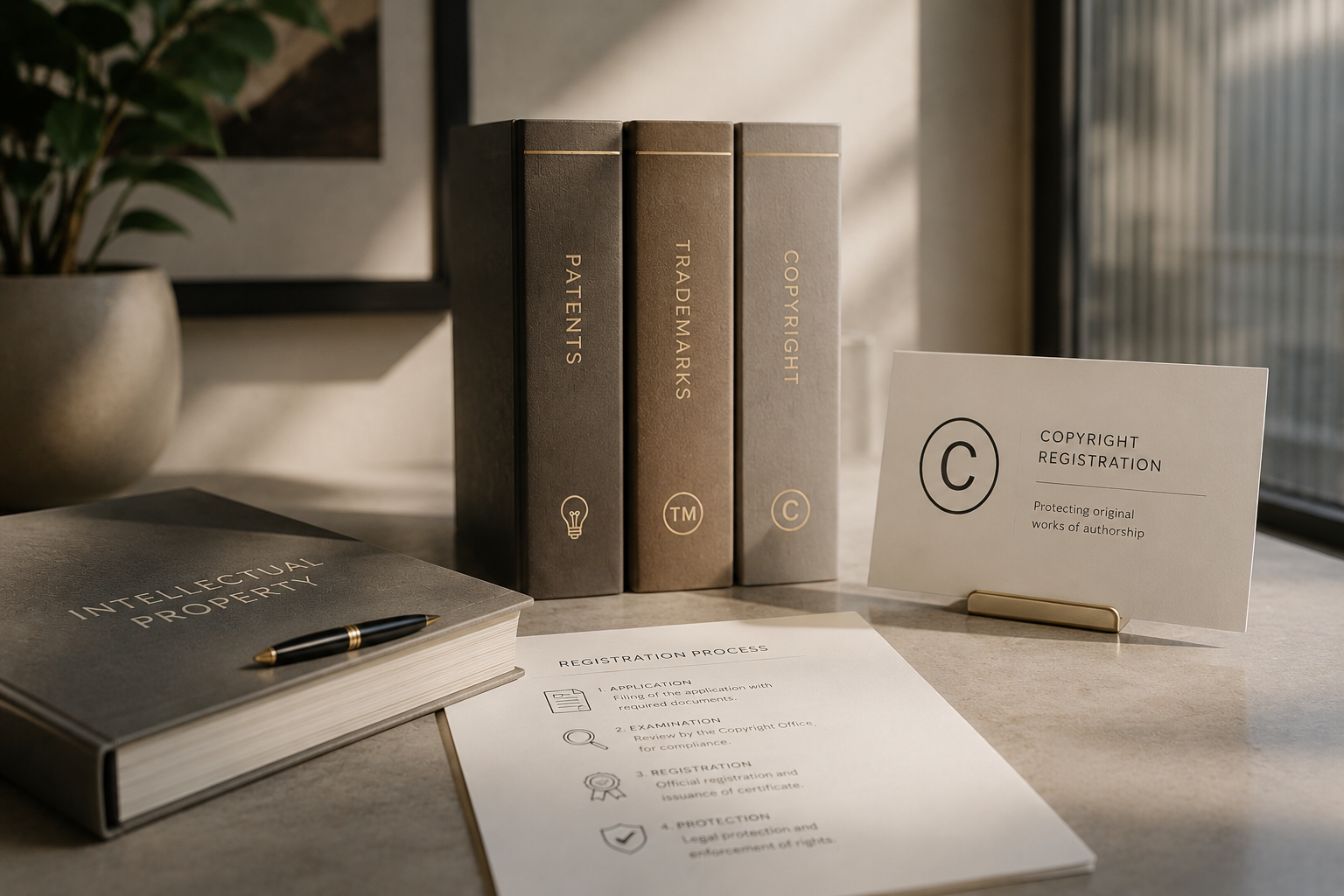
Patents and industrial designs protect innovation by granting exclusive rights over inventions and product designs for a specified period. In Pakistan, protection is governed by the Patents Ordinance, 2000 and the Registered Designs Ordinance, 2000. Rights are generally obtained through an application and registration process before IPO-Pakistan, which includes examination of the invention or design against statutory requirements. Registration can help prevent unauthorised use and provide legal remedies against infringement.
Intellectual Property
Trademarks
A trademark may consist of a name, logo, slogan, symbol, or other distinctive sign used to identify goods or services. Under the Trade Marks Ordinance, 2001, trademark rights are strengthened through registration with IPO-Pakistan. The registration process typically involves filing an application, examination, publication, and, where applicable, opposition proceedings. Registered trademarks provide legal recognition and help protect brand identity in the marketplace.
Copyright
Copyright protects original literary, artistic, musical, dramatic, and software works. Governed by the Copyright Ordinance, 1962, copyright generally exists upon the creation of an original work. Although registration is not mandatory, recording a copyright with the relevant authorities may provide additional evidentiary value when establishing ownership or enforcing rights in the event of a dispute
IP Disputes & Enforcement
The value of intellectual property lies not only in registration but also in its enforceability. Disputes may arise from infringement, counterfeiting, passing off, unauthorised reproduction, or ownership claims. Pakistani law provides mechanisms for enforcement through regulatory authorities and the courts, enabling rights holders to seek protection of their registered and unregistered intellectual property rights where applicable.
Licensing & Commercialisation
Intellectual property rights can be licensed, assigned, or otherwise commercialised without necessarily transferring ownership. Licensing arrangements allow intellectual property owners to grant permission for the use of their rights under agreed terms, while assignments transfer ownership itself. Proper documentation and registration requirements may apply depending on the nature of the transaction and the rights involved.